
Harnessing renewable energy to
Heat Water Efficiently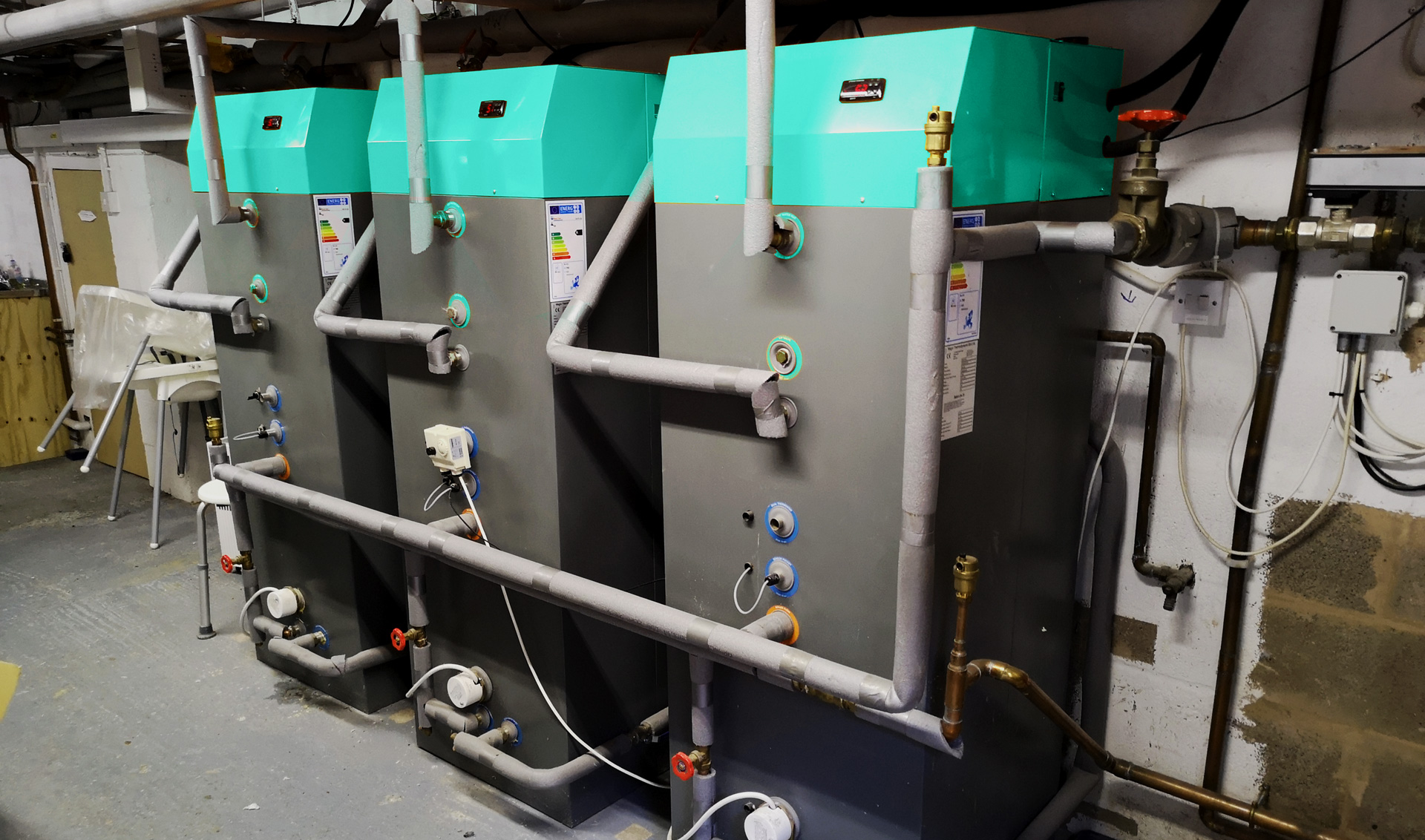

A fridge in reverse
The requirement to reduce energy bills and carbon emissions are driving the demand for alternative forms of water heating.
We provide a range of environmentally assisted heat pump water heaters to meet this demand. The range can be best described as ‘a fridge in reverse’. Most people understand that the panel on the back of their fridge is an important factor in keeping its contents cold.
Reversing this principle by using an aluminium evaporator (panel) to absorb heat rather than reject heat, allows us to utilise the ambient air temperature day and night, all year, to change the refrigerant liquid circulating through the panel from a liquid state to a gaseous state.
Read MoreEvaporator Panel
The returning refrigerant, now heated and in a gaseous state is then compressed and heated further.
The compressed refrigerant is then passed through a heat exchanger where the heat is transferred to the water, heating it to 55°C.
Most installations only require one thermodynamic evaporator panel and can be installed on a wall as well as a roof, both horizontally and vertically and once installed doesn’t need to be cleaned, or re-filled to operate.
Typically the Retrofit range is installed alongside your existing storage cylinder, within an 8 metre run of the panel, the installation of a 130L/200L/300L would replace the need for a storage cylinder.
Read MoreHeat Pump
Our environmentally assisted heat pumps, along with the external panel, provide hot water in either the integral cylinder within the 130L/200L/300 Lrange or an existing storage cylinder along side a Retrofit, heating water day and night in all weathers, all year.
We now have Environmentally Assisted Heat Pumps that are designed to work more efficiently with customers who have Solar PV installed.
They can now be linked to the customers Solar PV Inverter, and during periods of the day the system can utilise some of the productivity of the solar electricity to store the temperature of the water within the hot water cylinder up to 60°C, instead of up to 55°C. This means the end user will enjoy a larger volume of hot water when they need it and maximise the electricity generated from their solar PV array.
Read More